
What Is the AABB’s Role in Blood Bank Compliance?
The Association for the Advancement of Blood and Biotherapies (AABB), formerly known as the American Association of Blood Banks, is the international accrediting body and standards authority for blood banks, transfusion services, and related biological operations. AABB accreditation is the recognized benchmark for safe, high-quality blood banking practice in the United States and internationally.
AABB publishes its Standards for Blood Banks and Transfusion Services on a regular revision cycle. The 35th Edition, effective April 2026, continues to place continuous temperature monitoring at the center of blood storage compliance, reinforcing requirements that have tightened with each successive edition.
For any facility that stores, handles, or transfuses blood products, AABB standards are not optional guidance. They represent the minimum threshold for accreditation and the standard of care against which facilities are measured during inspections and audits.
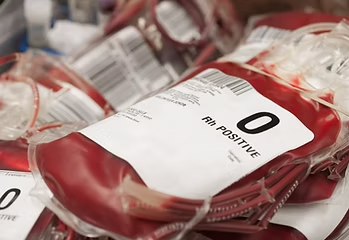
AABB’s storage temperature standard requires whole blood and red blood cells be held between 1°C and 6°C, monitored continuously with alarms set to trigger before the unit drifts out of range — not at the outer limits.
Key AABB Requirements That Apply to Your Operation
These standards govern every AABB-accredited blood bank and transfusion service. Each creates a documentation obligation where managed temperature monitoring supplies continuous, time-stamped evidence of compliance.
Storage Temperature & Continuous Monitoring
Whole blood and red blood cells must be held between 1°C and 6°C, platelets between 20°C and 24°C with continuous agitation, and plasma or cryoprecipitate at -18°C or colder. Storage temperature must be monitored continuously and recorded at minimum every four hours, around the clock.
Alarm Activation & Response
Alarms must be set inside the acceptable range — not at its outer edges — so staff are notified before stored blood reaches unsafe conditions. Every alarm must be audible and must reach a responsible party 24/7, including nights, weekends, and holidays.
Equipment Qualification & Maintenance
Refrigerators, freezers, and platelet incubators require documented calibration, preventive maintenance, and functional alarm testing. Assessors review this documentation, alongside continuous temperature records, during every accreditation inspection.
A Few Degrees Is the Difference Between Safe and Unsafe Blood Products
Blood and blood components are acutely sensitive to temperature. Unlike food inventory, where a brief excursion may be recoverable with documentation, a temperature failure in blood storage can render products unsafe for transfusion with no visible indication. Storage below 1°C risks hemolysis, where red cells rupture and the unit becomes unusable. Storage above 6°C accelerates bacterial growth and can lead to severe transfusion reactions, including sepsis.
When an excursion does occur, the affected units must be quarantined and investigated, and depending on severity, the facility may need to file a Biological Product Deviation Report with the FDA. That investigation consumes staff time and creates exposure well beyond the cost of the product itself.
According to the American Journal of Clinical Pathology, blood product waste in U.S. hospitals ranges from 1% to 5% annually, with improper temperature management as a leading cause — translating to an estimated $46 million to $230 million in wasted blood products every year. Beyond the financial cost, that is blood that could have saved lives.
The exposure is concentrated: a single replacement red blood cell unit runs $225–$300, and one undetected refrigerator failure can put $9,000–$30,000 of inventory at risk before anyone notices. Continuous monitoring is what closes that gap.
Required storage range for whole blood and red blood cells under AABB Standard 5.1.8.1 — drift either direction risks the unit
AABB’s alarm response requirement — an excursion at 2 a.m. on a holiday is still a compliance failure if it goes unanswered
Estimated annual U.S. blood product waste from improper temperature management (American Journal of Clinical Pathology)
Supporting AABB Accreditation with Managed Monitoring
Cooler Alert does not replace your blood bank’s quality program or your equipment service technicians — but it gives both of them better information, faster. Every reading is timestamped and logged automatically, producing a continuous record that goes well beyond AABB’s four-hour minimum.
When a unit starts drifting toward the edge of its safe range, your team is alerted immediately — day or night, weekday or holiday — instead of waiting for the next scheduled check. That earlier response window is what keeps a temperature drift from becoming a quarantined unit or a reportable event.
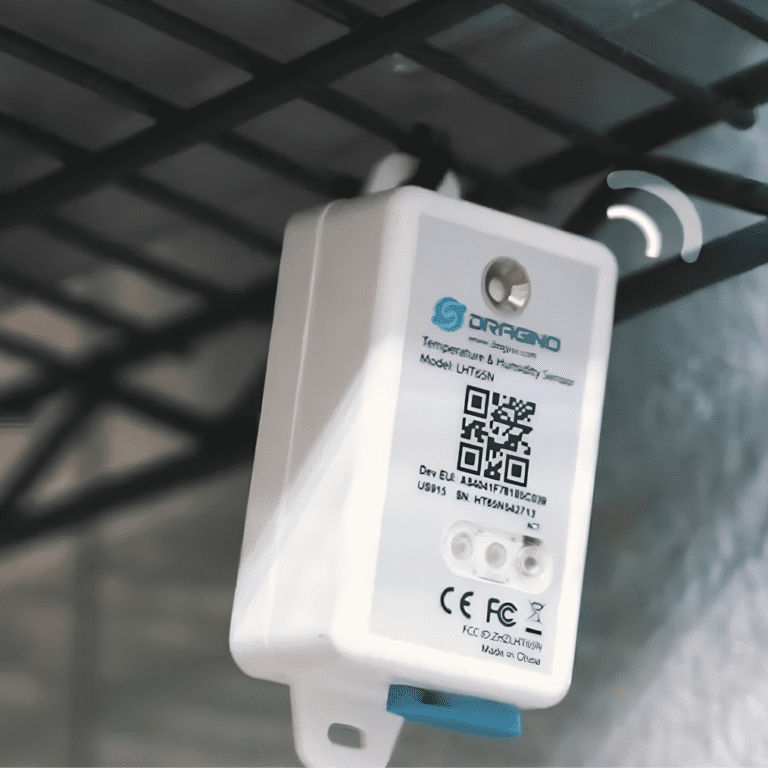
- Continuous monitoring exceeds AABB’s every-four-hours minimum, giving assessors a far more complete record under Standard 5.1.8.1
- 24/7 instant alerts reach designated staff nights, weekends, and holidays — satisfying the response requirements of Standard 5.7.1
- Automatic timestamped logs replace manual charting, producing the documentation AABB assessors expect to see during inspection
- Faster response shrinks the window between a drifting unit and corrective action, reducing quarantine events and Biological Product Deviation Reports
- Historical temperature data supports the equipment performance review that accompanies your calibration and preventive maintenance program under Standard 3.5
- Reduced preventable waste protects both patient supply and the $225–$300 replacement cost of every unit lost to an undetected excursion