
What Is HACCP?
Hazard Analysis and Critical Control Points (HACCP) is the gold-standard framework for food safety management, recognized by the FDA, USDA, and health departments across the country. Originally developed by NASA and Pillsbury to ensure safe food for space missions, HACCP is now the foundational approach to food safety for restaurants, institutional food service, food processors, and distributors worldwide.
HACCP is built on a straightforward principle: identify every point in your operation where a food safety hazard could occur, put controls in place at those critical points, and document everything.
Temperature monitoring is at the absolute core of HACCP. Most foodborne pathogens — including Salmonella, E. coli, and Listeria — multiply fastest in the “danger zone.” The USDA defines that range as 40°F to 140°F, while the FDA Food Code that governs food service tightens it to 41°F to 135°F. Keeping food consistently outside that range — and proving it — is what HACCP is all about.
The 7 Principles of HACCP
The seven principles were formalized by the USDA’s National Advisory Committee on Microbiological Criteria for Foods (NACMCF) and are published by the FDA. Temperature monitoring plays a direct role in nearly all of them — from setting critical limits to keeping the records inspectors ask for.
Conduct a Hazard Analysis
Identify where temperature abuse is a biological hazard risk in your operation.
Identify Critical Control Points (CCPs)
Common CCPs include receiving, cold storage, cooking, cooling, hot holding, and reheating.
Establish Critical Limits
Set specific safe temperature thresholds for each CCP (e.g., refrigeration below 41°F, hot holding above 135°F).
Establish Monitoring Procedures
Define how and how often temperatures are checked at each CCP.
Establish Corrective Actions
Document what happens when a temperature falls outside the critical limit.
Establish Verification Procedures
Confirm that the monitoring system is working correctly and consistently.
Establish Recordkeeping & Documentation
Maintain complete records of all monitoring, corrective actions, and verification — this is where most operations fall short.
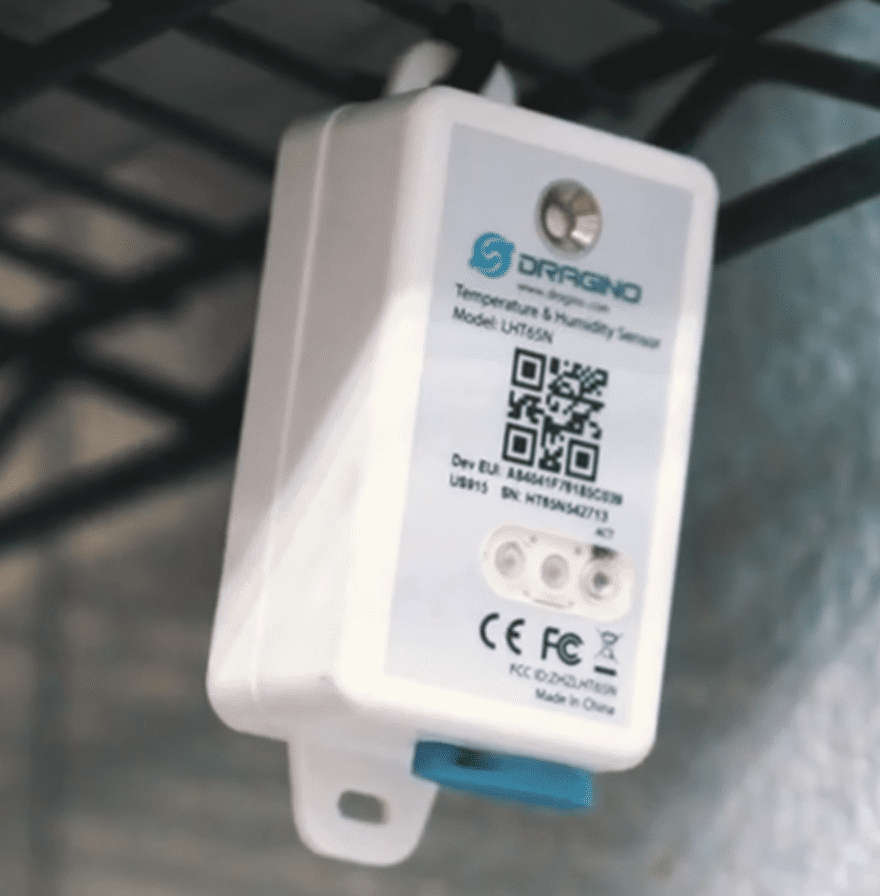
Where Cooler Alert fits: continuous, timestamped temperature monitoring directly serves principles 3 through 7 — enforcing critical limits, automating monitoring, flagging excursions for corrective action, and building the verification and recordkeeping trail that inspections depend on.
Where HACCP Is Required by Law
For most restaurants, grocers, and retail operations, HACCP principles are the backbone of a food-safety plan and the health-department inspections they face. For a few industries, though, a full HACCP plan isn’t optional — it’s mandated by federal regulation:
Seafood & Fishery Products
Processors and importers of fish and fishery products have been required to operate a HACCP system since 1997.
FDA — 21 CFR Part 123 →Juice
Juice processors must implement a HACCP system covering biological, chemical, and physical hazards.
FDA — 21 CFR Part 120 →Meat & Poultry
Every USDA-inspected meat and poultry establishment operates under a mandatory HACCP plan with defined critical limits and records.
USDA FSIS — 9 CFR Part 417 →And for FDA-registered food facilities, FSMA’s Preventive Controls rule is a HACCP-based system (sometimes called HARPC). Whichever framework applies to you, Cooler Alert’s continuous, timestamped monitoring supports the temperature critical limits, corrective actions, and records at the heart of all of them. See our FDA & FSMA compliance page →